
In short
- Within 5 seconds, the homepage has to say what the business offers, who it is for and what the next step is.
- Every service deserves its own page with the price, the process and a clear call to action.
- A short form with up to 4 fields and a visible phone number bring in more enquiries than long questionnaires.
- Speed, SSL and structured data are a must, while animated sliders often hurt your rankings.
Why most business websites bring no enquiries
The site looks good, but the phone stays silent. Plenty of businesses in Bulgaria know the feeling. Usually the design is not to blame. The site simply never nudges the visitor toward the next step. For a site to turn into a call or an enquiry, it does not need every possible element. It needs the right ones, arranged so they lead to action. At WebTact we first work out what the visitor has to do, and only then think about design. That is what makes a business website actually work.
The homepage: the first 5 seconds decide whether visitors stay
A visitor lands, looks around for a few seconds and decides whether to stay. In that time the homepage has to answer three questions: what the business offers, who it is for and what the next step is. If the answer is not visible right away, the visitor leaves. A clear headline, a short description of the value and one main call to action are the minimum. Visual hierarchy matters more than beauty: the eye should land on the offer and the action, not on decorative sliders. The mobile version is critical, because most Bulgarian users browse websites on their phones. This is where the answer to “what should a business website include?” begins.
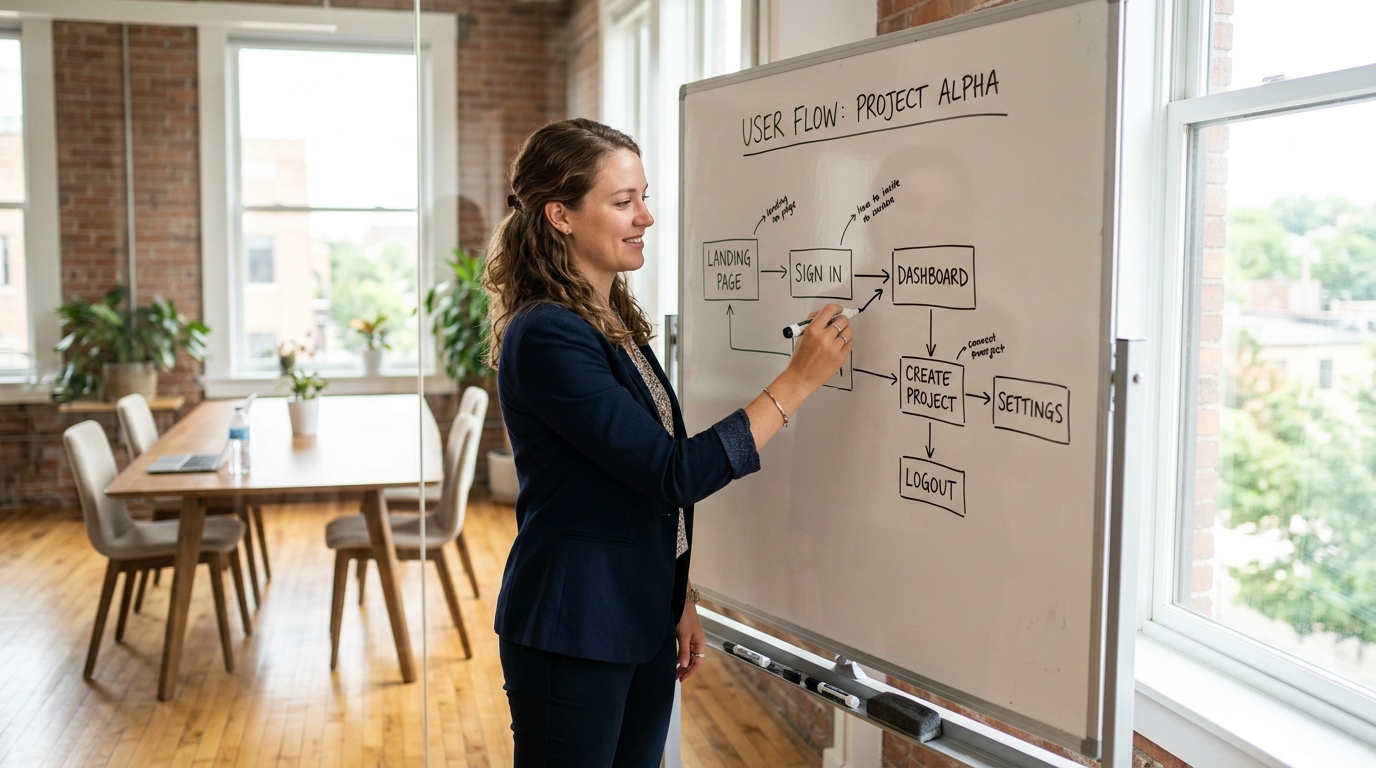
- A headline that says what the business offers and for whom
- One main action button, visible without scrolling
- A short description of the benefit, not of the activity
- A design that works equally well on phone and desktop
Service and product pages: from description to solution
Each service or product should have its own page instead of everything being lumped together in one place. A separate page gives the customer clear and complete information, which makes the choice easier. It should answer the main questions people have: what exactly the service includes, how it is carried out, what it costs and what result to expect. A clear call to action (a phone number, a form or an order button) matters because it points the user to the next step. For online stores, built-in Bulgarian couriers and accurate delivery information often remove the customer’s hesitation. The customer needs to know when the order will arrive and how much delivery costs before confirming it.
Contact details, enquiry form and “About us” page: trust comes from specifics
The contact page should hold the essentials: phone, email, address and opening hours. If a customer wants to reach you directly and cannot find a phone number, there is a good chance they will turn to a competitor. A short enquiry form with up to four fields gets better results than a long questionnaire, because every extra field cuts the number of people willing to fill it in. The “About us” page should introduce the team and its experience and explain why the business exists, without empty generic phrases. A Google Business Profile adds further trust and improves your visibility in Google Maps.
The more fields a form has, the fewer people fill it in to the end.
Reviews, testimonials and FAQ: what convinces Bulgarian customers
Bulgarian customers often check what others say before they contact a business. Real reviews and testimonials are among the strongest trust signals. They should sit close to the call to action, not be buried on a separate page. A frequently asked questions section answers objections before they block the enquiry, and it saves time for both sides. FAQ content also helps visibility: Google shows it in the People Also Ask section, and AI assistants use it in their answers. That makes the page useful for search engines as well as for visitors.
- Reviews from real customers, with name and photo
- Testimonials placed next to the enquiry button
- An FAQ with 5 to 8 questions customers actually ask
- Answers that are short and direct, with no marketing filler
Which elements bring enquiries and which are just decoration
| Element | Effect on the decision to get in touch | Time to implement | Cost | Effect on trust | Contribution to visibility in Google and AI |
|---|---|---|---|---|---|
| Visible phone number at the top | Directly prompts a call | Minutes | Next to nothing | Builds trust immediately | Small but positive |
| Reviews from real customers next to the action button | Strongly prompts contact | A few hours | Low | Very strong effect | Medium, with structured data |
| Detailed page for each service | Makes the decision to get in touch easier | Days to weeks | Medium | Builds trust through specifics | High, with well written copy |
| FAQ section with real questions | Removes objections before contact | A few hours | Low | Builds trust | High, through People Also Ask and AI |
| Animated sliders on the homepage | Rarely makes anyone call | Days | Medium to high | No change to trust | Often slows the site and hurts rankings |
| Background music or autoplay videos | More likely to put people off | Hours | Low to medium | Can do harm | Slows loading |
On a limited budget, invest first in the elements that bring enquiries. Once the basics work and start attracting customers, decorative elements can add value, but they should not slow the site down or distract from the main action.
The technical elements you cannot see but that decide the outcome: speed, SSL, structured data and ownership
Loading speed is directly linked to how likely a visitor is to stay and look through your content. Every one second delay noticeably raises the share of users who leave. An SSL certificate is a must for trust and security, since browsers warn people about sites without one. Structured data gives search engines and voice assistants a machine readable format that improves the site’s visibility in the results. Owning your domain, hosting and accounts guarantees full control: without it, the business risks losing its site when circumstances change.
Web design research shows that clear navigation comes from a visible, consistent menu, backed up by links and a search function. Structure and clarity are not “cosmetics”. They are the foundation a successful site is built on. Before you send traffic to the site, check these technical elements so it can turn visitors into customers.
Frequently asked questions
Which pages does every business website need?
Usually a homepage, a page for each service or product, a contact page with full details and an “About us” page. An online store also needs pages for delivery, returns and frequently asked questions.
How can you check whether your current website meets these requirements?
Open the site on your phone and check whether, within three seconds, it is clear what the business offers and how a customer can get in touch. Then check the loading speed, whether there is an SSL certificate, and whether each service has its own page with a clear call to action.
How much does a business website cost and what drives the price?
The price depends on the number of pages, whether you need an online store, integrations with couriers and other systems, and the level of SEO work. Current prices are published on our website development page.
What does it mean for a business to own its domain, hosting and accounts, and why does it matter?
When the site’s name, the server and the accounts are registered to the business, it keeps control and security. If an outside contractor holds them, the business becomes dependent on that contractor and risks losing the site if the work together ends.
Why does it matter that Google and AI assistants understand your website?
More and more customers look for information through AI assistants like ChatGPT and through Google. If the site is not structured properly, the business stays invisible to this growing audience. Structured data and clear copy help the site get found and cited.